
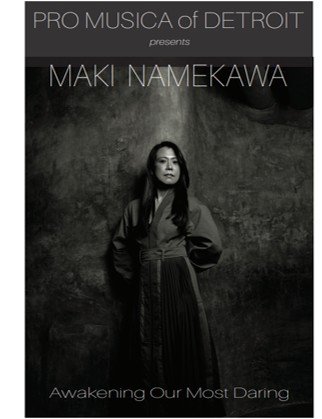
Last Friday’s season‑opening concert from Pro Musica of Detroit was a rare kind of event—the sort that reminds you why live music matters. Pianist Maki Namekawa, long admired for her crystalline technique and fearless musical curiosity, delivered a program that felt both intimate and monumental. Held at Wayne State University’s Gretchen C. Valade Jazz Center, the evening marked Pro Musica’s first performance in the venue and the beginning of its 99th season.
Hosted by Cecelia Sharpe of WRCJ 90.9 FM, the concert drew a full house of listeners eager to hear Namekawa in a program built around three composer‑pianists: Keith Jarrett, Chick Corea, and Philip Glass—the last of whom wrote his Piano Sonata expressly for her.
Jarrett’s Ritual: A Thirty‑Minute Invocation
Maki opened with Keith Jarrett’s Ritual, a work whose composed structure still pulses with Jarrett’s improvisational DNA. Her performance captured the piece’s paradox: its meditative stillness and its volcanic undercurrent. She shaped the long arcs with patience, letting Jarrett’s characteristic harmonies bloom gradually. The final pages—quiet, suspended—felt like a held breath shared by the entire room.
Corea’s Children’s Songs: Miniatures with a Soul
The selected Children’s Songs (Nos. 4, 6, 16, 18) offered a striking contrast. Namekawa played them with a light, transparent touch, revealing their Bartók‑like clarity and rhythmic playfulness. Corea’s stated aim—simplicity as beauty—came through vividly. Each miniature felt like a self‑contained world, rendered with affection but never sentimentality.
Glass’s Distant Figure: A Late‑Style Glow
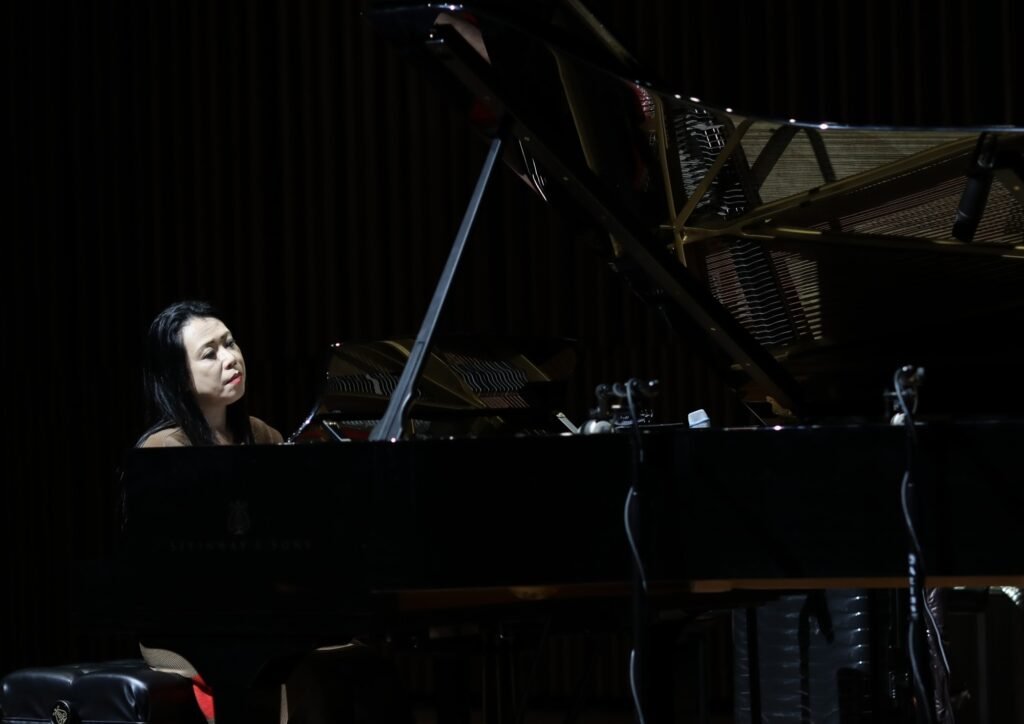
After intermission, Namekawa turned to Philip Glass’s Distant Figure – A Passacaglia, a work steeped in late‑career introspection. Her interpretation balanced its nostalgic haze with the surges of pianistic brilliance that break through the texture. The Passacaglia’s repeating bass line became a kind of heartbeat—steady, human, quietly resolute.
The Glass Piano Sonata: A Composer and Performer in Dialogue
The evening concluded with Glass’s three‑movement Piano Sonata, written for Namekawa and premiered by her. Hearing her perform it live is revelatory: she doesn’t just play the piece; she animates its architecture.
- Movement I unfolded like a constellation of ideas gradually finding coherence.
- Movement II carried a lyrical warmth, shaped with her signature clarity.
- Movement III surged with rhythmic vitality—Glass’s familiar motoric energy, but refracted through a more personal, exploratory lens.
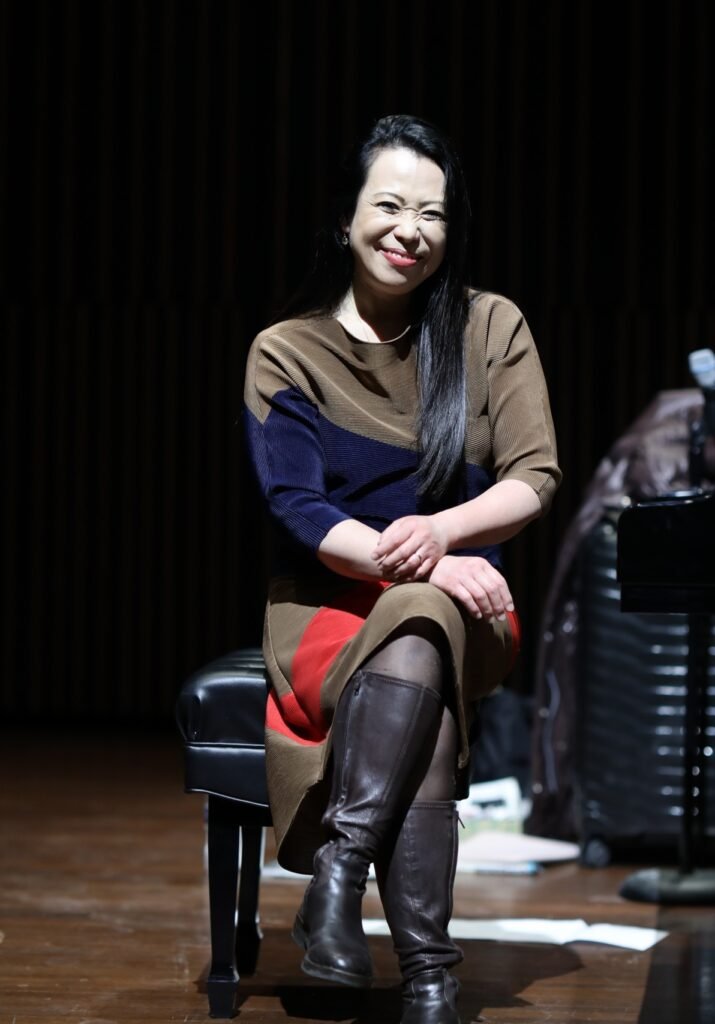
Glass has said he didn’t fully understand how the piece sounded until Namekawa played it. Last week’s performance made that statement feel literal.
The Artist’s Presence
Namekawa’s stage presence is understated yet commanding. Her connection to the music—and to the composers themselves—was palpable. Pro Musica audiences may remember her 2023 duo performance with Dennis Russell Davies; this solo program reaffirmed her standing as one of the most compelling pianists working today.
Afterglow & Community
The post‑concert Afterglow, supported by the Japan America Society of Michigan and Southwestern Ontario, extended the evening’s warmth. Conversations about Jarrett’s phrasing, Corea’s charm, and Glass’s structural daring filled the room.
Final Thoughts
This inaugural concert of Pro Musica’s 2026 season was more than a showcase of virtuosic piano music—it was a celebration of artistic relationships, musical lineage, and the power of interpretation. Namekawa’s performance illuminated the “heroic and the greatness within the human spirit,” just as the program notes promised.